Grey Structure vs Finished Construction: What's the Cost Difference?
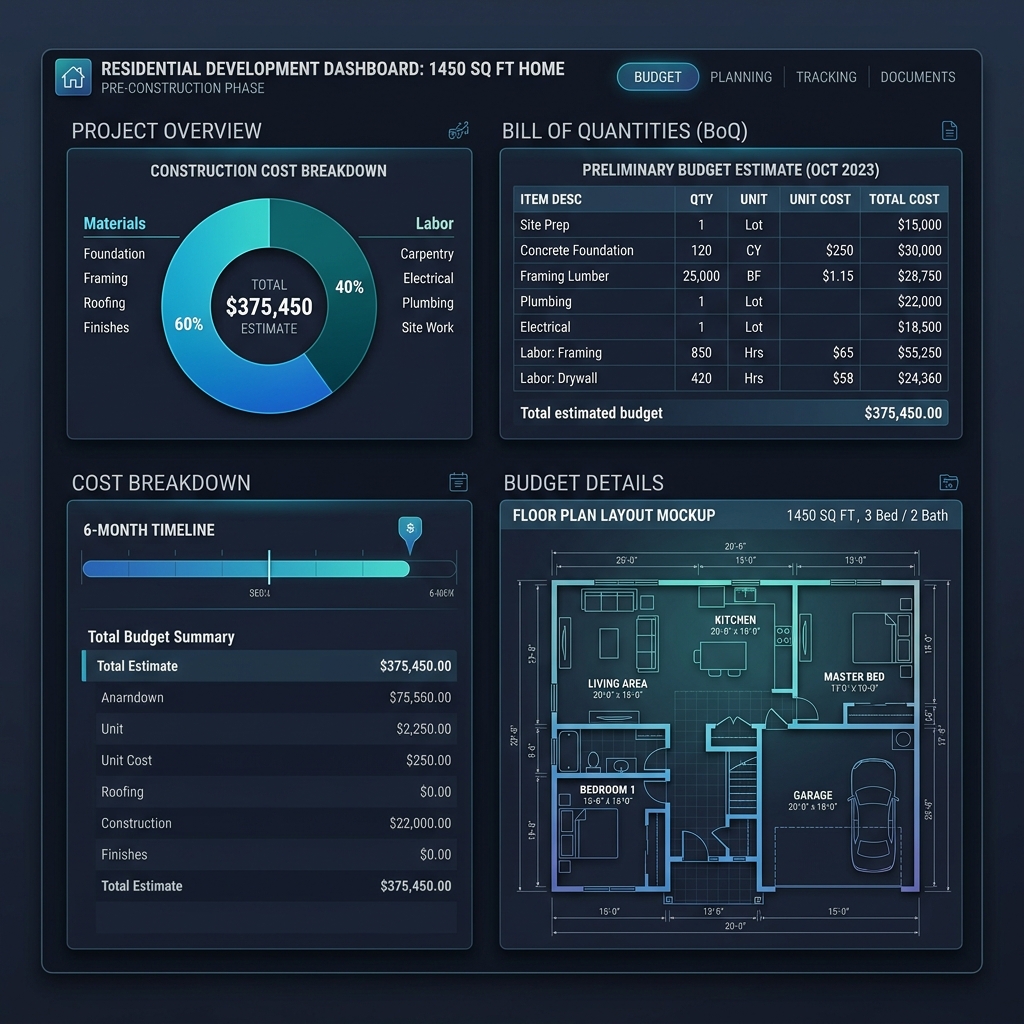
The cost difference between grey structure and finished construction generally splits your total budget into two distinct halves: structural masonry and concrete shells account for approximately 50-60% of the cost, while interior tiling, cabinetry, painting, and fixtures make up the remaining 40-50%. The final ratio fluctuates based on choice of luxury finishes.
Understanding Grey Structure Scope
The grey structure refers to the raw skeleton of the building. This includes the foundations, columns, beams, brickwork, internal plastering, and primary plumbing/electrical conduits. It represents the structural stability of the house.
Managing Finishing Costs and Custom Specifications
The finishing phase represents where budgets can spiral out of control. While concrete and steel prices are stable locally, importing luxury finishes can raise the finishing budget by 50% or more. Learn how to track these materials in our How to Read a BOQ tutorial.
Estimating Your Structural Envelope
To establish baseline pricing for both phases, run your project parameters through our free construction estimator to view itemized lists for both masonry and interior finishing items.
Frequently Asked Questions (FAQ)
- Can I manage the finishing phase myself to save money?
- Yes. Many self-builders hire contractors for the grey structure only, and then manage tiling, woodwork, and paint sub-trades independently.
- Which phase is most sensitive to material inflation?
- Grey structure is highly sensitive to steel and cement volatility, while finishing is impacted by shipping rates and imported material tariffs.
- What is the typical ratio for standard builds?
- A standard residential budget is typically divided as 50% structure and 50% finishes depending on regional code compliance requirements.