How AI Generates a Bill of Quantities from a Floor Plan
AI systems generate a Bill of Quantities (BOQ) from architectural floor plans by applying computer vision and spatial analysis rules to detect wall perimeters, slab areas, and door/window counts. By mapping these dimensions to standard material yield formulas, the algorithm estimates total structural concrete, steel rebar, and finish quantities instantly.
The Computer Vision Behind Takeoffs
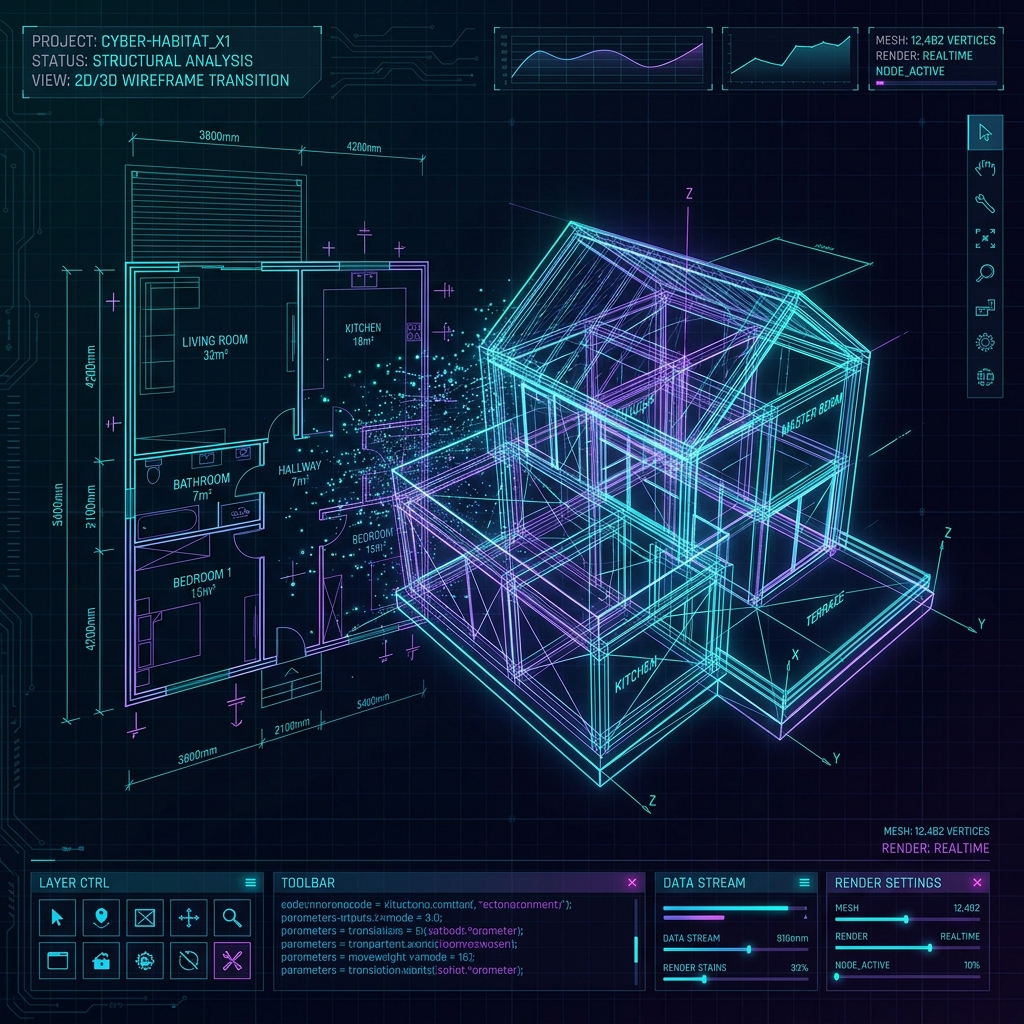
When you upload a plan, the model scans room tags and line weights to distinguish load-bearing brickwork from dry partition walls. This enables the engine to calculate spatial areas automatically, reducing the estimation timeline by over 90%.
Mapping Areas to Material Volume Yields
For example, a structural wall height of 3.0 meters is combined with the wall thickness to compute the required volume of concrete hollow blocks or red bricks. Similar logic calculates foundation slab volumes and structural rebar weights based on standardized engineering span ratios.
Exporting Your Automated Takeoff
Once compiled, the quantities are matched to standard material unit rates to form a complete draft. You can access and manage these layouts inside our floor plan calculator.
Frequently Asked Questions (FAQ)
- How accurate is the drawing scanning process?
- Clean CAD files achieve near-perfect dimensional scaling, while low-resolution image scans may require checking structural annotations manually inside the planner wizard.
- Does the AI recognize electrical and plumbing runs?
- The system estimates MEP (Mechanical, Electrical, Plumbing) lengths using average run ratios mapped to your room layouts rather than tracing single conduit paths.
- Can I export the output directly?
- Yes, you can export the full itemized list as a builder-ready Excel or PDF document on Pro tiers.